



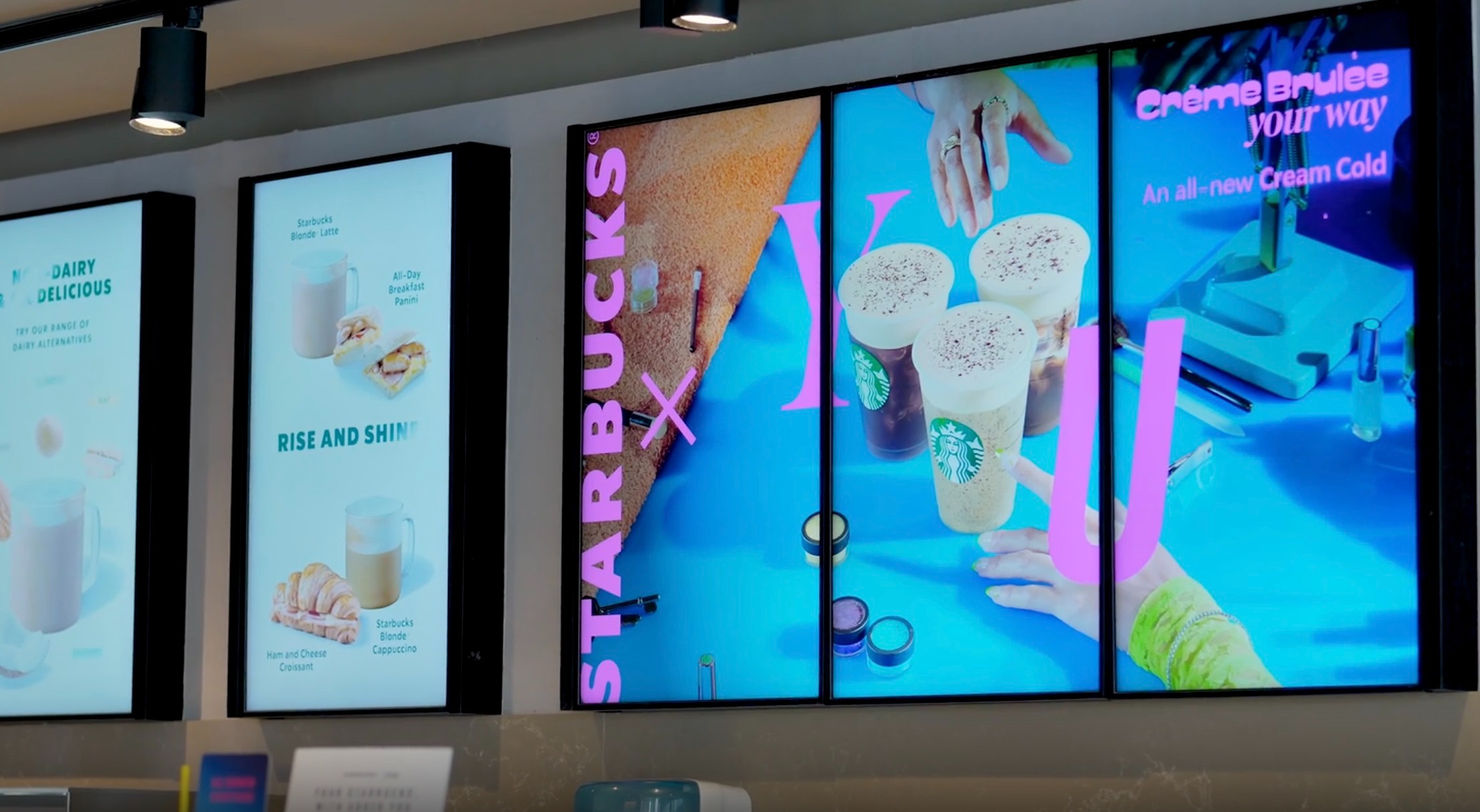
Digital menu boards for restaurants have become a popular choice for those looking to enhance the customer experience, streamline operations, and increase sales. But does it really matter that much? And if so, how do you make it work?
Digital menu board design: why care?
Investing in the design of digital menu boards is essential for modern businesses looking to enhance customer experience and drive sales. High-quality visuals and dynamic content not only make your offerings more appealing but also allow for quick updates and promotions, ensuring that your menu is always current and enticing. An effective digital menu board can reduce perceived wait times and improve operational efficiency by providing clear, organised information. In an increasingly competitive market, the right design can set your business apart.
How to design a great digital menu board for restaurants
Designing an effective digital menu board involves more than just displaying your menu items on a screen. It requires a thoughtful approach that considers aesthetics, functionality, and customer engagement.
Understand your audience and goals
Before designing a digital menu board, it’s important to understand your audience and goals. Consider who your target customers are, what their preferences and dining habits are, and what you want to achieve, whether that’s increasing sales, promoting specials, or enhancing brand image. By understanding your audience and goals, you can tailor the design of your menu board to meet their needs.
Focus on readability and clarity
One of the most important aspects of a digital menu board is readability. Customers should be able to quickly and easily read the menu items and prices.
- Simple layout: Use a clean layout that organises menu items logically. Avoid clutter and ensure enough white space between items.
- Legible fonts: Use large, legible fonts that are easy to read from a distance. Sans-serif fonts are generally more readable on digital screens.
- High contrast: Ensure high contrast between text and background. Use dark text on a light background or light text on a dark background.
- Consistent formatting: Use consistent formatting for menu items, descriptions, and prices so customers quickly find what they need.
Use high-quality images and videos
High-quality images and videos can enhance the visual appeal of your menu board and entice customers to make a purchase.
- Mouth-watering photos: Use high-resolution, well-lit photos of your dishes that accurately represent the food.
- Dynamic videos: Incorporate short videos highlighting the preparation process, ingredients, or special promotions.
- Image placement: Strategically place images next to the corresponding menu items. Avoid overloading the screen.
Highlight specials and promotions
Digital menu boards offer the flexibility to highlight specials and promotions in real time. Use eye-catching graphics and phrases like “Limited Time Offer” to create urgency, rotate promotional content to keep the board dynamic, and schedule time-sensitive promotions such as breakfast specials in the morning or happy-hour deals in the evening.
Incorporate branding elements
Consistent branding reinforces your restaurant’s identity. Use your brand’s colours and fonts consistently, include your logo and tagline prominently, and incorporate design elements such as icons, patterns, and borders that align with your brand’s theme.
Ensure flexibility and ease of updates
One of the key advantages of digital menu boards is the ability to update content quickly. Use a user-friendly content management system (CMS) that allows real-time updates, create template-based designs that can be modified without starting from scratch, and ensure the CMS can be accessed remotely, which is especially useful for multi-location restaurants.
Test and optimise
Once your digital menu board is implemented, gather feedback from customers and staff, monitor performance metrics such as sales of promoted items and average order value, and make continuous improvements based on what you learn.
Final thoughts
Designing an eye-catching and effective digital menu board requires a combination of understanding your audience, focusing on readability, using high-quality visuals, highlighting promotions, incorporating branding, ensuring flexibility, and continuously optimising. By following these best practices, you can create a digital menu board that enhances the customer experience, drives sales, and reinforces your restaurant’s brand.